1. Establishing shots
An establishing shot is a shot at the head of a scene that clearly shows us the location of the action. Establishing shots have no rules other than helping to build tone and context, but they're not required to be wide or from a drone or to be accompanied by a screen-sized title card.
EXTREME WIDE EXAMPLE
2. Extreme Wide Shot (EWS)
An extreme wide shot (aka extreme long shot) is a camera shot that will make your subject appear small against their location. You can also use an extreme long shot to make your subject feel distant or unfamiliar.

Of all the different types of camera shots in the film, consider using the extreme wide shot when you need to emphasize the location and the relationship of the characters within it.
WIDE SHOT EXAMPLE
3. Wide Shot (WS) or Long Shot (LS)
The wide shot is a camera shot that balances both the subject and
the surrounding imagery. A wide shot will often keep the entire
subject in frame while giving context to the environment.
Here's an example of the wide shot size:

A wide shot should keep a good deal of space both above and below your subject. Of the many camera shots, a long shot gives us a better idea of the scene-setting and gives us a better idea of how the character fits into the area. Wide shots also create narrative distance with the subject, often dwarfing characters against an expansive terrain.
FULL SHOT EXAMPLE
4. Full Shot (FS)
A full shot is a camera shot in the film that lets your subject fill the frame, head to toe, while still allowing some features of the scenery.

This full shot from Django Unchained is also a tracking shot — meaning there is a camera movement featured throughout the shot. In this particular case, the camera slowly moves (or tracks) towards Django. So, technically, this shot begins in a wide shot, moves to a full shot (seen above), and eventually ends in a cowboy shot. Of all the different types of camera shots in the film, full shots can be used to feature multiple characters in a single shot, like this full shot size example from Marvel's Guardians of the Galaxy

MEDIUM WIDE SHOT EXAMPLE
5. Medium Wide Shot (MWS)
A medium-long shot (aka medium long shot) frames the subject from roughly the knees up. It splits the difference between a full shot and a medium shot. Here's an example of the medium wide shot size:
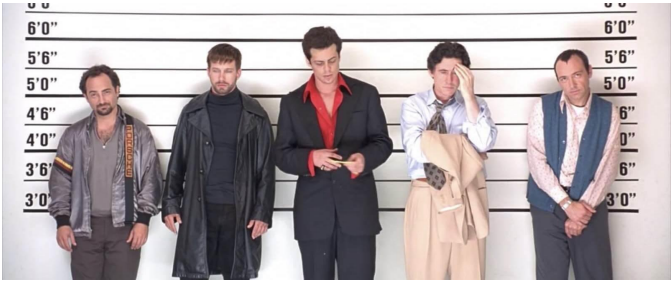
You can always frame camera shots from any angle as well, so don't be afraid to think about medium-wide shots when behind a character.
COWBOY SHOT EXAMPLE
6. Cowboy Shot (CS)
A variation on this is the cowboy shot, which frames the subject
from roughly mid-thighs up. It’s called a “cowboy shot” because it
is used in Westerns to frame a gunslinger’s gun or holster on his
hip.
Here's an example of the cowboy shot size:

8. Medium Close Up (MCU)
The medium close-up frames your subject from roughly the chest
up. So it typically favors the face, but still keeps the subject
somewhat distant.
Here's an example of the medium close-up shot size:

CLOSE-UP SHOT EXAMPLE
9. Close Up (CU)
You know it’s time for a close-up shot when you want to reveal a
subject’s emotions and reactions. The close-up camera shot fills
your frame with a part of your subject. If your subject is a person, it
is often their face.
Here's an example of the close-up shot size:

EXTREME CLOSE-UP SHOT EXAMPLE
10. Extreme Close Up (ECU)
An extreme close-up shot is a type of camera shot size in the film
that fills the frame with your subject and is so close that we can
pick up tiny details that would otherwise be difficult to see.
This camera shot size often shows eyes, gun triggers, and lips. Extreme closeup shots are sometimes shot with a macro lens for greater detail.
Here's an example of the extreme close-up shot size:
