Different types of camera shots in the film
Great filmmakers not only know all of the different types of camera shots in film and TV, but they know how to use even basic camera shots to emphasize specific moments and story beats in their films. This begins with learning the different camera shot sizes. Here's a handy chart that lays out some of the basic shot sizes and how they're defined.
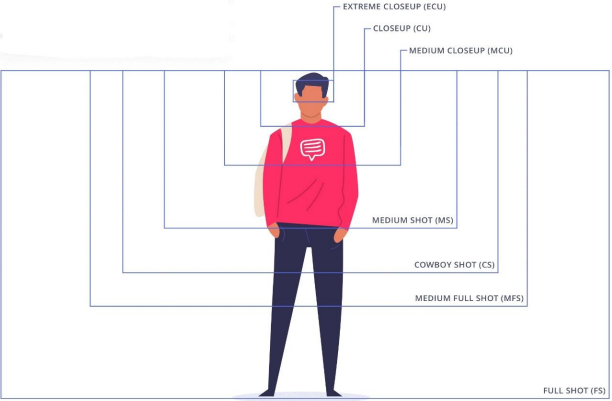
Which camera shot size do you choose to begin your scene? What shot size should come at the end? Which of the various camera angles and levels? Each of these will change the visual message of your shot.

Selecting your shots is part of the fun of filmmaking, but it's also a very serious decision because each shot size choice you make will alter the surrounding shots and the way we receive them.
CAMERA ANGLES
1. Eye Level Shot
2. Low Angle Shot
3. High Angle Shot
4. Hip Level Shot
5. Knee Level Shot
6. Ground Level Shot
7. Shoulder Level Shot
8. Dutch Angle Shot
9. Overhead Shot
10. Aerial Shot
CAMERA ANGLES
Camera Shot Angle Overview
It's not enough to just understand the shot size. Camera angles,
and the degree of those angles, can change the meaning of a
shot. As you prepare your shot list, it helps to remember all the
options. We're going to build a shot list to highlight the various
camera angles.
Here is a shortlist of the different types of camera shot angles. We
used some of the most iconic camera angles from films like The
Matrix, Do the Right Thing, and Pulp Fiction as a sort of
cheatsheet. Can you guess what movies are represented here?
Follow the image link to see the fully populated shot list, which
you can also download and use for reference.
Camera Shot Angles
Now that's we've reviewed all the different types of camera angles
in film, let's take a closer look at them one at a time.
EYE LEVEL SHOT EXAMPLE
Eye Level Shot Our first camera angle is the eye-level shot, and this is when your subject is at eye-level. An eye-level shot can result in a neutral perspective (not superior or inferior). This mimics how we see people in real life — our eye line connecting with theirs, and it can break down boundaries. Here's an example of the eye-level camera angle:

Eye-level shots are much less standard than one might initially think because directors often prefer to place the camera at shoulder level to attain a much more cinematic look.
LOW ANGLE SHOT EXAMPLE
Low Angle Shot
A low angle shot frames the subject from below their eye
line. These camera shots most often emphasize power
dynamics between characters — a low angle shot on one
character is often paired with a high angle shot on the other
character.
Here's an example of the low angle camera angle:

Low Angle Shot • The Matrix
Low angle camera shots are a perfect camera angle for signaling
superiority or to elicit feelings of fear and dread. Here's a video that
dives deeper into the various low angle shot examples and how
they have been used by filmmakers like Wes Anderson, Orson
Welles, and Spike Jonze.
In your next shot list, when you've got a character who is
powerful (or at least feeling powerful), consider the low angle
shot. It will bring that extra bit of meaning to your shot.
HIGH ANGLE SHOT EXAMPLE
High Angle Shot
In a high angle shot, the camera points down at your subject. It
usually creates a feeling of inferiority, or “looking down” on your
subject. But, again, with every other camera angle, there are many
applications.
Here's an example of the high angle camera angle:

High Angle Shot Example • Avengers
Here is our video on how you can use high angle shots in your film. But, as the video below shows, there are the standard and more creative expressions of the high angle shot.
The high angle shot is a versatile shot that can be used in many situations. The most common usage is to make a character seem vulnerable and powerless but there are always exceptions to the rule
HIP LEVEL SHOT EXAMPLE
The Cowboy Shot or Hip Level Shot
A Cowboy shot is when your camera is roughly waist-high.
Hip level shots are often useful when one subject is seated
while the other stands.
Hip level shots can also be extremely useful camera angles for
when you have the action that occurs near the hip, like
weapons being drawn, or someone reaching into their
pocket. That's why it's also known as a "cowboy shot" — we
can't think of hip level shots without seeing a gun, holster,
and the enemy ahead in the distance.
Here's an example of the hip level camera angle:

The further away you get from the subject, like in this moment from Punch-Drunk Love, to keep the subject framed with proper headroom, a hip level shot will get the job done.
KNEE LEVEL SHOT EXAMPLE
Knee Level Shot
This is when your camera height is about as low as your subject’s
knees. They can emphasize a character’s superiority if paired with
a low angle. It's not as extreme as a ground-level shot but it gets
the same feeling across. These are ideal when you want to focus
on characters walking, or in this case from Home Alone, creeping.
Here's an example of the knee level camera angle:

Knee Level Shot • Home Alone
GROUND LEVEL SHOT EXAMPLE
Ground Level Shot
A ground-level shot is when your camera’s height is on ground
level with your subject. This camera angle is used a lot to feature a
character walking without revealing their face, but it can help to
make the viewer more active and use the actor's performance to
build an idea.
Here's an example of the ground-level camera angle:

Ground Level Shot Example • Burn After Reading
SHOULDER LEVEL SHOT EXAMPLE
Shoulder Level Shot
A shoulder level shot is a camera angle that is as high as your
subject’s shoulders. Shoulder level shots are much more standard
than an eye-level shot, which can make your actor seem shorter
than reality.
Here's an example of the shoulder level camera angle:

Shoulder Level Shot • Black Panther
Because the camera is aligned with the shoulder, it allows the actor's head to reach the top of the frame (reducing headroom). It also places the actor's eye-line slightly above the camera, and, in turn, the illusion of a slightly lower angle.
DUTCH ANGLE EXAMPLE
Dutch Angle or Dutch Tilt Shot
For a Dutch angle (Dutch tilt), the camera is slanted to one side.
With the horizon lines tilted in this way, you can create a sense of
disorientation, a de-stabilized mental state, or increase the
tension.
Here's an example of the Dutch angle camera angle:

Dutch Angle Camera Angle •
Here's a video example of the Dutch angle camera angle focusing on the precise moment to use one. Watch as the scene begins with "level" and "normal" shots before switching to Dutch angles for maximum impact.
Think of the Dutch angle as "emphasis" for any tense or subjective moment. It's a great way to amplify whatever emotion, mental state, or suspens
OVERHEAD SHOT EXAMPLE
Overhead Shot or Bird's Eye View An overhead shot is from above, looking down on your subject. These are typically shot from 90 degrees above — anything less might be considered a high angle shot instead. An overhead shot doesn't need to be super high, but it can be. Here's an example of the overhead shot camera angle:
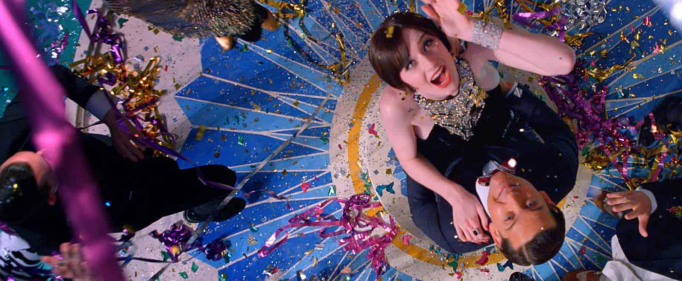
Overhead Shot Camera Angle •
Overhead shots are great for providing perspective on a scene — but not just any perspective. It's often used as either a "neutral" or sometimes "divine" point of view.
AERIAL SHOT EXAMPLE
Aerial Shot An aerial shot, whether taken from a helicopter or drone, is captured from way up high. It establishes a large expanse of scenery. Many of the helicopter shots in Black Hawk Down are aerial shots. Here's an example of the aerial shot camera angle:

Affordable drones have made aerial photography more accessible to filmmakers. Once considered a big-budget luxury or stockfootage mainstay, original aerial photography is now within reach of almost any production, all thanks to the "rise" of drones (and Sky-net).
ESTABLISH THE SCENE
1. Establishing shots
An establishing shot is a shot at the head of a scene that clearly
shows us the location of the action. Establishing shots have no
rules other than helping to build tone and context, but they're not
required to be wide or from a drone or to be accompanied by a
screen-sized title card.
EXTREME WIDE EXAMPLE
2. Extreme Wide Shot (EWS)An extreme wide shot (aka extreme long shot) is a camera shot that will make your subject appear small against their location. You can also use an extreme long shot to make your subject feel distant or unfamiliar. Here's an example of the extreme wide shot size:
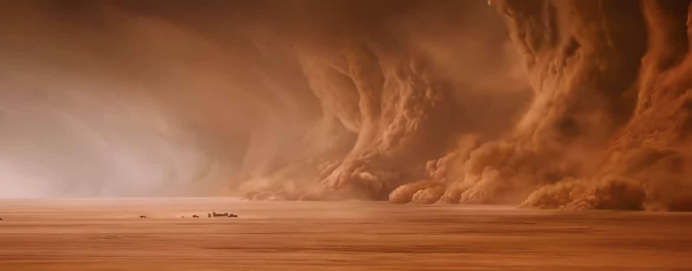
Extreme long shot • Mad Max: Fury Road
Of all the different types of camera shots in the film, consider using the extreme wide shot when you need to emphasize the location and the relationship of the characters within it.
WIDE SHOT EXAMPLE
3. Wide Shot (WS) or Long Shot (LS) The wide shot is a camera shot that balances both the subject and the surrounding imagery. A wide shot will often keep the entire subject in frame while giving context to the environment. Here's an example of the wide shot size:

(LS) Long Shot Example • The Martian
A wide shot should keep a good deal of space both above and below your subject. Of the many camera shots, a long shot gives us a better idea of the scene-setting and gives us a better idea of how the character fits into the area. Wide shots also create narrative distance with the subject, often dwarfing characters against an expansive terrain.
FULL SHOT EXAMPLE
4. Full Shot (FS)
A full shot is a camera shot in the film that lets your subject fill the
frame, head to toe, while still allowing some features of the
scenery.
Here's an example of the full shot size:
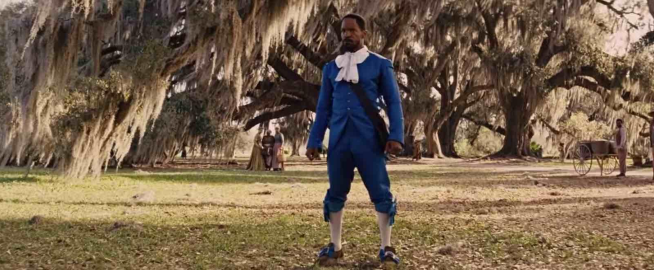
Full Shot Example • Django Unchained
This full shot from Django Unchained is also a tracking shot —
meaning there is a camera movement featured throughout the
shot. In this particular case, the camera slowly moves (or tracks)
towards Django. So, technically, this shot begins in a wide shot,
moves to a full shot (seen above), and eventually ends in a cowboy
shot.
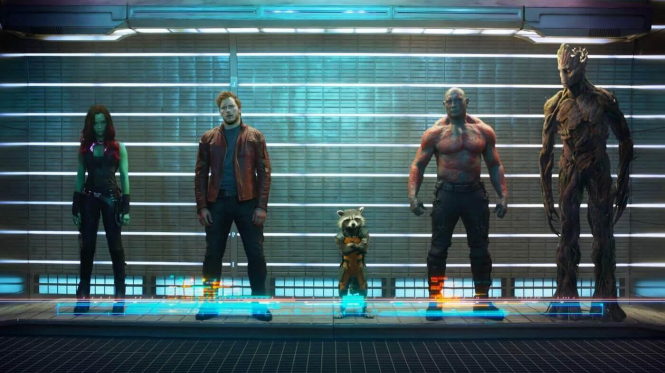
Of all the different types of camera shots in the film, full shots can
be used to feature multiple characters in a single shot, like this full
shot size example from Marvel's Guardians of the Galaxy
MEDIUM WIDE SHOT EXAMPLE
5. Medium Wide Shot (MWS)
A medium-long shot (aka medium long shot) frames the subject
from roughly the knees up. It splits the difference between a full
shot and a medium shot. Here's an example of the medium wide
shot size:
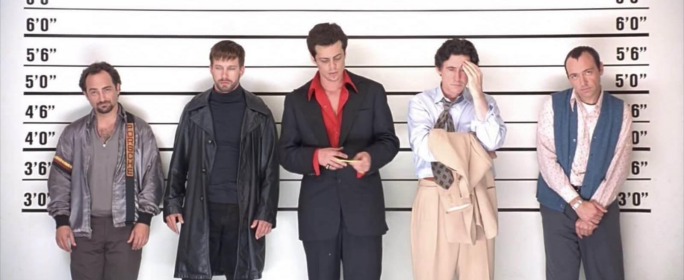
(MWS) Medium Wide Shot Example • The Usual Suspects
You can always frame camera shots from any angle as well, so don't be afraid to think about medium-wide shots when behind a character
COWBOY SHOT EXAMPLE
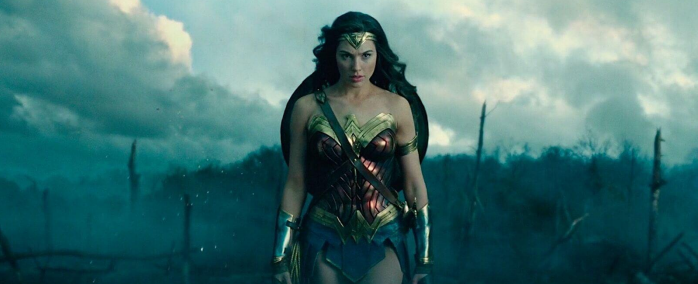
6. Cowboy Shot (CS) A variation on this is the cowboy shot, which frames the subject from roughly mid-thighs up. It’s called a “cowboy shot” because it is used in Westerns to frame a gunslinger’s gun or holster on his hip. Here's an example of the cowboy shot size:
8. Medium Close Up (MCU)
The medium close-up frames your subject from roughly the chest
up. So it typically favors the face, but still keeps the subject
somewhat distant.
Here's an example of the medium close-up shot size:
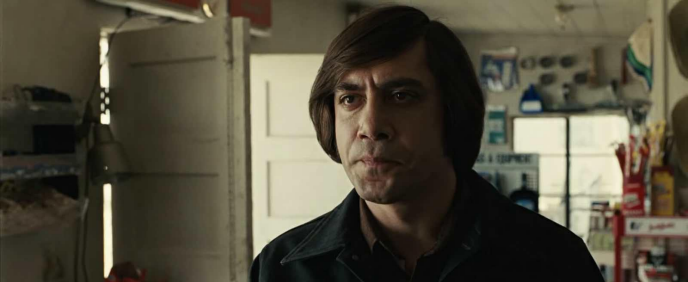
(MCU) Medium Close Up Example • No Country for Old Men
CLOSE-UP SHOT EXAMPLE
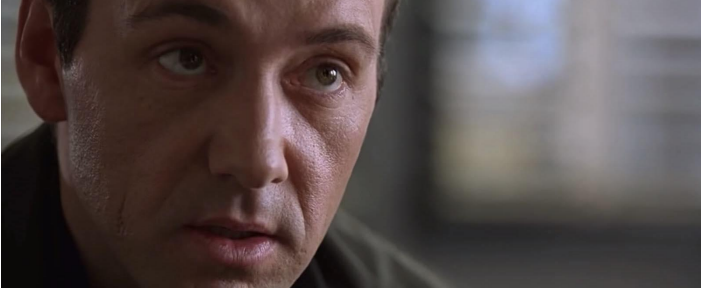
9. Close Up (CU) You know it’s time for a close-up shot when you want to reveal a subject’s emotions and reactions. The close-up camera shot fills your frame with a part of your subject. If your subject is a person, it is often their face. Here's an example of the close-up shot size:
EXTREME CLOSE-UP SHOT EXAMPLE
10. Extreme Close Up (ECU)
An extreme close-up shot is a type of camera shot size in the film
that fills the frame with your subject and is so close that we can
pick up tiny details that would otherwise be difficult to see.
This camera shot size often shows eyes, gun triggers, and lips.
Extreme close-up shots are sometimes shot with a macro lens for
greater detail.
Here's an example of the extreme close-up shot size:
